Late Summer Care: Easing Your Shelterbelt Seedlings Toward Dormancy
If your seedlings made it through the quiet, slow stretch of early summer, good news: the hardest part is behind you. But late summer isn’t a time to coast either. What your seedlings need in August is different from what they needed in June, and getting this shift right sets them up for a Prairie winter instead of catching them off guard.
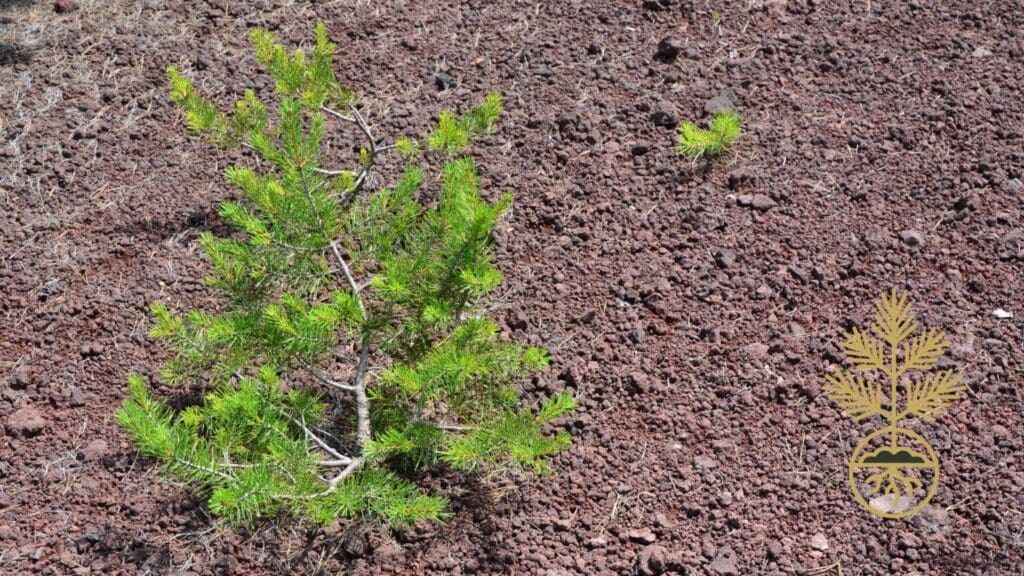
Growth needs to slow down, not speed up
Through the early season, you’re rooting for growth. By late summer, you’re rooting for the opposite. A seedling that’s still pushing soft, tender new growth into September hasn’t had time to harden that growth off before the cold hits, and tender tissue is exactly what winterkill goes after first.
If you applied a top dressing of slow-release fertilizer earlier in the year, there’s no need to add more at this point, one application is doing its job over time. And if you’ve been using a water-soluble fertilizer through the summer, this is the point to back off. Any nitrogen boost this late tells the plant to keep growing when it should be winding down, and tender new growth is exactly what a Prairie winter targets first.
Ease off watering, don’t stop completely
Watering needs to shift too, but gradually. Deep, infrequent watering is still the right approach, just space it out a bit more as the weather cools and the plant’s growth slows. The goal is a seedling that goes into fall well-hydrated at the root, not one that’s been pushed to keep growing by a watering schedule built for July.
Now isn’t the time to stop watering altogether, as a dry prairie August can still stress a young root system, and dormancy prep works best when the plant isn’t fighting drought at the same time.
Skip the pruning
We get this question a lot in late summer: is it too late to prune? For a first-year seedling, the honest answer is yes, leave it alone. Pruning encourages new growth right at the point where you want the plant settling down, not putting out fresh shoots that won’t have time to harden before frost. If something’s damaged or diseased, that’s a different conversation, but routine shaping can wait until the seedling’s dormant or into next season.
What normal looks like right now
- Growth rate slowing noticeably compared to spring and early summer
- Colour holding steady rather than pushing bright new growth
- Leaves or needles that may look a little duller as the season winds down, which is normal, not a warning sign
- Larch beginning to show its fall colour shift later in the season, which is simply what deciduous conifers do
Telling seasonal slowdown from a real problem
A natural slowdown looks gradual. Growth eases off over weeks, colour shifts slowly, and the plant still looks structurally sound even if it’s duller than it was in June. A real problem tends to move faster and look different: sudden wilting that doesn’t recover, browning that spreads quickly rather than settling in gradually, or foliage that goes brittle rather than simply dulling in colour.
The general rule: slow and steady is dormancy prep. Sudden and spreading is something else. If you’re ever unsure which one you’re looking at, we’re happy to take a look.
The short version
Late summer is about helping your seedlings ease into dormancy, not pushing them for one more round of growth. Ease off water, hold back on additional fertilizer, skip the pruning shears, and let the plant do what it’s built to do heading into a Prairie winter.