Shelterbelt Seedling Care in the First Year: What’s Normal and What’s Not
If you planted seedlings from us this spring, July is when the calls start coming in. Someone’s spruce looks smaller than pictured, someone’s larch looks like a bundle of dead sticks. Good shelterbelt seedling care starts with knowing what’s actually normal for a first summer, and what’s worth a call.
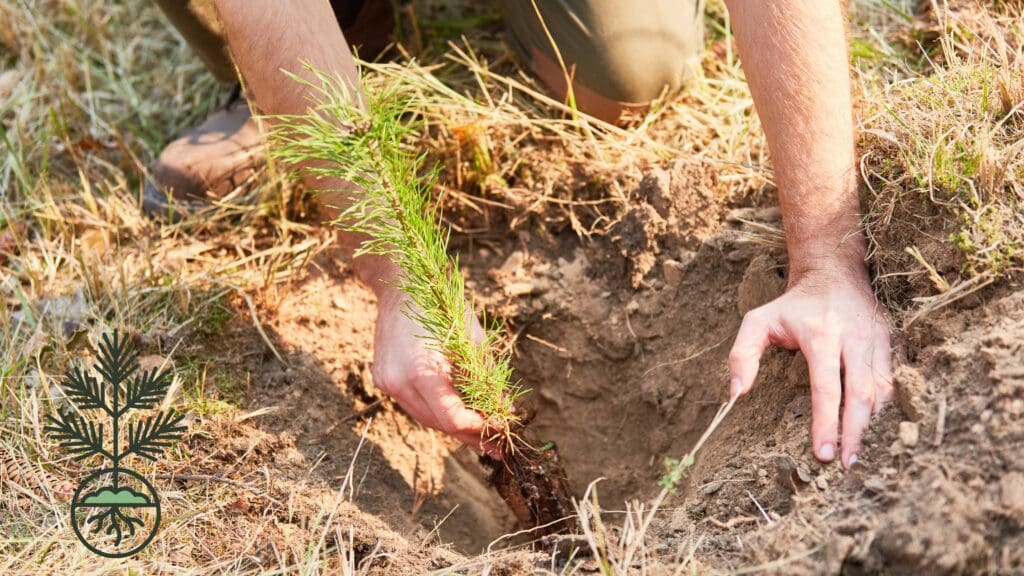
You planted seedlings, not trees
This matters more than people expect. Our stock ships as young seedlings, generally 8 to 14 inches depending on variety, with a root system still developing. That’s by design, seedlings this size establish faster and adapt better to your site than older, larger stock would. But it also means a quiet first summer. You won’t see a foot of new growth. You’ll see a small plant doing the slow work of building roots.
If your seedling looks about the same size in August as it did at planting, that’s not a stall. That’s the plan working.
Give dormancy a fair chance first
We ship everything as dormant as possible as it’s easier on the plant during transit. That means a seedling can sit doing seemingly nothing for a week or two after planting. Nothing changed a few days in? You’re not behind, the plant’s right on schedule.
You may also notice bare root stock arrives dry root, no soil, while plug material comes dipped in water and wrapped. Neither is a sign of trouble, just two shipping methods, and both need that same patience while dormancy breaks.
About that larch
We get more panicked calls about larch than almost anything else, and it’s almost always the same story. Larch is a deciduous conifer, so it drops its needles every fall and leafs back out in spring, unlike spruce or pine. Right after shipping, a young larch can look like bare twigs with a few small buds, no green in sight. To someone expecting a little potted spruce look-alike, that reads as dead.
It’s not. Give it into early summer, and soft green needles will emerge along the stem. Zero bud movement by midsummer is worth a photo.
What’s normal for everyone else
- Minimal visible size change over the summer
- Foliage a bit paler or smaller than mature specimens you’ve seen elsewhere
- Slow, steady colour rather than dramatic new growth
- A seedling that looks “the same” for weeks at a time
What’s worth a second look
Wilting that doesn’t bounce back overnight. Some afternoon droop in Prairie heat is normal. Still limp the next morning means a watering issue, and an easy fix.
Foliage that goes brittle and brown, not just pale. Stressed and struggling are different things.
Split, sunken, or damaged bark at the base. That’s a planting or handling issue, not normal establishment. Worth a photo.
What actually helps a young seedling
Water is the biggest factor. A small root system dries out fast in Prairie wind and heat, so deep, infrequent watering beats a quick daily splash. Let it soak down to where the roots actually are.
Mulch around the base holds that moisture and cuts weed competition. Hold off on fertilizer this first year, a seedling needs roots before top growth, and fertilizer pushes it the wrong way at the wrong time.
Where we can actually help
Worth being upfront: we guarantee our stock is healthy and true to type on arrival. Once it’s in your ground, weather, watering, and site conditions do most of the work, and honestly matter more to how a seedling turns out than anything we control from here.
What we can do, any time, is help you figure out whether what you’re seeing is normal. That’s what the call or photo is for. Catching a watering problem in week two is a very different conversation than discovering it in September, and we’d rather have the first one with you.
The short version
A quiet, slow-looking first summer is exactly what success looks like for a young seedling. A bare larch in spring isn’t a red flag, it’s just how that species works. If you’re ever unsure, send us a photo early, before a small issue turns into a bigger one.