Why Porosity Matters: Rethinking Shelterbelts for Better Dust Control
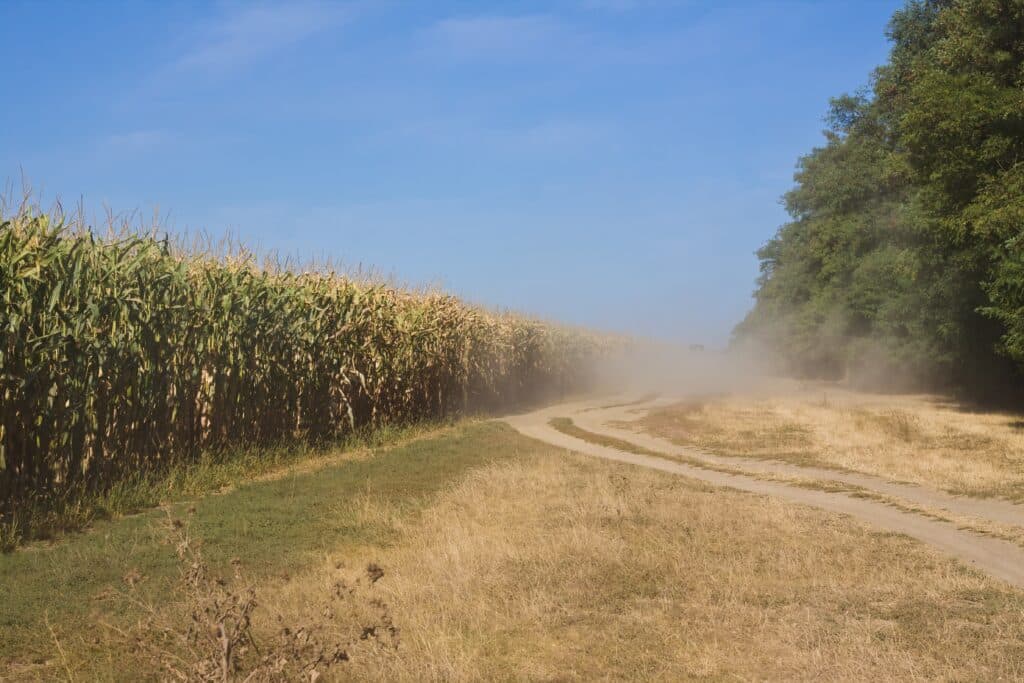
Across the Canadian Prairies, wind and soil movement have always gone hand in hand. When left unmanaged, that movement turns into dust erosion, carrying away valuable topsoil, reducing productivity, and creating long-term challenges for both farmers and rural communities.
Shelterbelts were introduced as a direct response to this problem. In fact, the Prairie Farm Rehabilitation Administration was established during the Dust Bowl era with a clear mandate: control soil drifting and rehabilitate vulnerable land. From the beginning, shelterbelts were designed not as decoration, but as a practical system to reduce wind erosion at its source.
Shelterbelts Prevent Dust – They Don’t Just Filter It
A common misconception is that shelterbelts act as air filters, capturing dust after it has already entered the atmosphere. In reality, decades of Prairie research show that their primary function is prevention.
By reducing wind speed near the ground, where soil movement begins, shelterbelts limit the amount of dust that becomes airborne in the first place. Studies have shown wind speed reductions of 30–80% at ground level, with corresponding soil erosion reductions often exceeding 50%. Rather than cleaning dust far downwind, shelterbelts promote settling close to the source and stabilize soil before it can move.
This distinction is important. The most effective approach to dust control is not capturing particles after the fact but preventing their release altogether.
The Economic Value of Slowing Dust Erosion
Slowing dust erosion has clear economic benefits. When topsoil is lost, so is the foundation of agricultural productivity. Preserving that soil reduces the need for costly remediation and supports more consistent yields over time.
Research across the Prairies has also identified broader economic impacts. Shelterbelts contribute to improved air and water quality, carbon sequestration, and biodiversity. One study estimated that the external benefits of shelterbelt programs in Western Canada exceeded $140 million, with significant value attributed to reduced soil erosion and environmental services.
In practical terms, shelterbelts also protect infrastructure. Areas such as field edges, livestock yards, gravel roads, and farmyards, where dust accumulation is typically highest, benefit from reduced maintenance and improved working conditions when wind is managed effectively.
Why Porosity Matters More Than Density
One of the most important findings from Prairie shelterbelt research is that more density is not always better. A solid wind barrier may seem effective, but it can actually create turbulence on the downwind side. This turbulence can lift dust and redistribute it rather than allowing it to settle.
Instead, the goal is controlled porosity. Research consistently points to an ideal shelterbelt density of approximately 30–40%, resulting in a wind reduction of about 40–60%, not 100%.
A porous shelterbelt slows the wind gradually, reducing its energy without causing abrupt disruption. This allows airborne particles to settle and minimizes the risk of further soil movement. In contrast, a “wind wall” works against natural airflow, often reducing its effectiveness.
In simple terms, the most effective shelterbelts don’t stop the wind, they manage it.
What an Effective Shelterbelt Looks Like
Design plays a critical role in performance. Prairie research and field experience show that multi-row, mixed-species shelterbelts consistently outperform single-row or single-species plantings.
An effective layout typically includes:
- A shrub row to capture dust at ground level, where soil movement begins (0–1 metre height)
- Dense conifer rows for year-round wind reduction and filtration
- Deciduous trees to provide height and improve airflow mixing
- Optional additional rows for added depth or specific purposes, such as fruit or flowering species
Spacing and structure also matter. Typical recommendations include trees planted about 10 feet apart, rows spaced 8–20 feet apart, and shrubs spaced 3–6 feet apart. Research indicates that 3–5 rows provide optimal performance, with mixed plantings delivering better results than uniform designs.
This layered approach allows the shelterbelt to address wind and dust at multiple heights, improving overall effectiveness.
How Far the Benefits Extend
The impact of a shelterbelt goes well beyond the trees themselves. The protected zone typically extends 10–20 times the height of the trees downwind, with the strongest effects occurring within the first 5–10 tree heights.
For example, a shelterbelt with trees approximately 10 metres tall can provide measurable wind reduction and dust control for up to 100–200 metres downwind. This extended reach makes shelterbelts a practical solution for large areas, not just localized protection.
A System Built on Prairie Research
More than a century of research across Manitoba, Saskatchewan, and Alberta has reinforced the same conclusion: shelterbelts are most effective when designed as systems, not barriers.
They work best when they:
- Focus on preventing dust at the source
- Use multiple rows and mixed species
- Maintain controlled porosity rather than solid density
While additional benefits, such as carbon storage, habitat creation, and improved aesthetics, are well documented, the core value of shelterbelts remains clear. They protect soil, reduce wind erosion, and support long-term land productivity.
Ultimately, the goal is not to eliminate wind, but to slow it down just enough to keep the soil where it belongs.
If you boil down over 100 years of Prairie research, the conclusion is simple: shelterbelts work best when they prevent dust, not just try to catch it.
Sources & References
- Agriculture and Agri-Food Canada (AAFC)
- Prairie Farm Rehabilitation Administration (PFRA)
- Brandon University research on shelterbelts
- University of Saskatchewan / University of Alberta studies
- Better Farming Prairies article on shelterbelts ResearchGate study on economic benefits